Showing posts with label Christmas. Show all posts

December 21, 2023

Who Were the Wise Men?

Almost every Nativity scene features three wise men, each wearing a golden crown, and arriving from the east riding heavy-laden camels. But what do we really know about the wise men? Were there really even three? What was the significance of their gifts and what does their story teach us about our own journey to seek the Savior?

For centuries Christians have sought to learn more about the wise men. Some traditions even give them names, for example Caspar, Melchior, and Balthasar. While we often picture three wise men, the scriptures don’t actually tell us how many came. The only reason there so often are three magi is because they brought three gifts. Because of the dangers of traveling for long distances in a caravan, it is likely that there were more than just three wise men.

We also don’t know where they even came from, only that they came from the east. While there are many theories on their origin, some scholars have suggested they came from Babylon and were of Jewish descent. In 587 BC the Babylonians destroyed Jerusalem and carried away many Jews into slavery. Seventy years later, the Jews were allowed to return to their homeland. However, tens of thousands remained behind, creating in Babylon a thriving Jewish community.

The wise men being of Jewish descent living in Babylon makes logical sense because who more likely would be studying ancient Israelite prophecies about the coming Messiah? We can envision faithful Jews whose ancestors remained in Babylon, continuing to search and celebrate God’s sacred word. When a star appeared in the night sky revealing that prophecies of the coming Messiah were about to be fulfilled, they left everything and traveled to Jerusalem.

So what about the wise men being kings wearing crowns and adorned in royal robes of wealth? It seems later Christians, in an effort to fill in the missing details, went searching in the Old Testament. Isaiah prophesied, “And the Gentiles shall come to thy light, and kings to the brightness of thy rising…. The multitude of camels shall cover thee … they shall bring gold and incense; and they shall show forth the praises of the Lord.” (Isaiah 60:3, 6). From these verses later Christians presumed the wise men must be gentile kings arriving on camels from faraway lands. While these verses may have partial fulfillment in the story of the wise men, the primary context of this prophecy seems to describe the last days and is yet to be fulfilled. This means our wise men were almost certainly not wearing crowns!

After traveling a long distance from their homeland, the magi arrived in Jerusalem in search of a new born king. They first thought to visit the palace of King Herod, but this visit greatly “troubled” him. Herod had been placed upon the Jewish throne by Rome shortly after he had conquered Jerusalem around thirty years earlier. Because Herod was not of the royal family of King David, and wasn’t considered of true Jewish lineage, most Jews simply saw him as a Roman puppet king whom the Lord would someday overthrow. Because of this, Herod often went to extreme measures to retain his power.

Remarkably, when Herod consults his chief priests and scribes about the sign of the star, they are able to confirm the prophecies. It appears they took two prophecies, one from Numbers and another from Micah, to identify where the infant king would be born: “There shall come a Star out of Jacob, And a Scepter shall rise out of Israel.” (Number 24:17). “But thou, Bethlehem … out of thee shall he come forth … to be ruler in Israel.” (Micah 5:2). While Herod’s scribes and chief priests were able to correctly interpret the ancient prophecies, they themselves were not even looking for the Messiah! The wise men had possibly journeyed for more than a thousand miles to find the newborn king of Kings. Yet Jerusalem’s priests and scribes seemed unwilling to even travel the short distance of approximately six miles, or ten kilometers, to the village of Bethlehem. This story reminds us that it isn’t enough to just know and understand the scriptures. We must be willing to go the distance to find the Savior so that we too can kneel before him and worship him.

Herod sends the wise men to Bethlehem, imploring them to report to him after finding the infant King, supposedly so he too can worship him. Imagine the scene as these foreign visitors from distant lands began asking around the neighborhood to find the birthplace of the young king. Many locals might have laughed and scorned the visitors for their peculiar request. We are not told how long they had to search, but eventually they did manage to find Joseph, Mary, and Jesus. Matthew records that by this time, Jesus was a “young child,” suggesting that they had been on their journey for several months, if not longer.

It would have been a breathtaking moment for these faithful visitors who had traveled so far to find the young child. As they fell to the ground to worship him, they laid at his feet their precious gifts of gold, frankincense, and myrrh. But why these particular items? What is the significance of these gifts? Obviously such things would not be at the top of any child’s gift-list today. Powerfully, all three gifts were connected to temple worship, seeming to foreshadow the redemptive and sacrificial mission of Christ.

While jewelry, coins, and gold bars might come to our minds today when we think of gold, an ancient Jew would likely first think of God’s Tabernacle and Holy Temple. The Lord commanded Moses to cover much of the Tabernacle, including its walls, and all of its interior furniture with gold. During the time of Jesus, King Herod was in the process of renovating the temple and he had plated the entire facade and interior with large sheets of gold. If indeed these wise men were of Jewish origin, they would have seen gold as a most fitting and appropriate gift for Israel’s Messiah King who would be enthroned in the heavenly Temple.

Anciently, frankincense was more valuable by weight even than gold! The odors of human sweat, spoiling food, dung, smoke, and death would have dominated virtually every setting of daily life! Because of this, spices and incense like frankincense and myrrh were highly prized and quite valuable as they helped in masking unpleasant odors. Both of these incenses came from certain trees that mostly grow in southern Arabia. The incense is actually just tree sap, and is harvested by gouging the bark and letting the sap bleed out. After the sap dried, it was collected and brought by caravan to areas such as Jerusalem. The difficulty in harvesting and the long distance required in transport made the product extremely valuable.

During the morning and evening prayers, frankincense was burned on the altar of incense at the Temple. The smoke rising to heaven before the veil represented the prayers of the saints ascending to God. The gift of frankincense is an appropriate gift for the Savior, for it is because of his sacrifice that our prayers can be answered by God. 

Myrrh was similarly used to mask unpleasant odors and was often used as part of the burial process. John records that Nicodemus provided large quantities of myrrh which were used for the burial of the Savior. Myrrh was also melted down and added to the anointing oil for Aaron and his sons and all future priests before they could serve at the Temple (see Exodus 30:23). Myrrh is a fitting gift for the Savior who would die yet rise with healing in his wings, and as the Great High Priest who intercedes on our behalf!

Perhaps we cannot afford precious gifts like gold and incense. Still as we celebrate this Christmas season, what are some gifts that we might give to parallel the gifts of the wise men in significance and meaning? Like the wise men, let us give the Lord the gift of our time in studying and understanding His sacred word. Not just so we can understand the prophecies and revelations, but so that we can then go the distance, leaving behind every worldly thing to find the true king of Kings. Let us give to our Savior the gift of temple worship, laying our sins and self-serving desires on the altar of sacrifice, allowing the atonement of Christ to take effect in our lives. Let us give Jesus the gift of frankincense in the form of offering humble and meaningful prayers morning and evening. As we kneel, let us pray for the strength and courage to serve others. Then let us rise to our feet and do the works of Christ.

Perhaps most importantly, let us remember that the most significant gift ever given is the gift of our Father in Heaven. “For God so loved the world, that he gave his only begotten Son, that whosoever believeth in him should not perish, but have everlasting life.” (John 3:16). Let us remember this gift, and accept it from the Father by repenting of our sins and embracing the Savior’s example in all we do. This is the best Christmas gift we can give this season and throughout the year! The gift of Jesus Christ!


December 5, 2021

The Annunciations - The Nativity


Luke begins his Nativity narrative with the annunciations of the angel Gabriel to Mary and Zacharias. It seems that Luke purposefully places these two stories next to each other to not only contrast Mary and Zacharias, but also to compare the two miraculous birth stories of John the Baptist and Jesus Christ.

The first annunciation of Gabriel occurs in Jerusalem at the temple to Zacharias, a priest of the course of Abia. The courses of the priests were established during the reign of King David, when there were too many priests to serve in the temple at one given time. Because of their large numbers, King David divided the priests into twenty-four courses, Abia being one of these courses. Each of these courses would serve for one week twice throughout the year, meaning that Zacharias would only have the chance to actually serve in the temple for two weeks during each year.

Temple assignments for the priests, ranging from performing sacrifices to lighting the menorah, were chosen by casting lots. The most honorable assignment was to burn the incense before the veil of the temple. This burning incense was offered every morning and evening in the Holy Place and represented the prayers of Israel ascending to heaven before the veil. This was the closest that Zacharias would ever come to the Holy of Holies, and it appears to be an assignment that he had never previously received.

As part of the ritual, Zacharias, while praying, was to burn a combination of incenses on the golden altar, including interestingly enough, frankincense, one of the gifts of the wise men. Outside, the people would be praying and waiting until Zacharias had finished. After which he would come to the door of the temple to pronounce a blessing upon them. Of course, Zacharias would never be able to pronounce this blessing, because he had been cursed by the angel, adding to the awe and wonder of the people.

The second annunciation of Gabriel occurs in the small village of Nazareth, to an obscure young girl named Mary, who was probably around 12 or 13 at the time. The contrasts between these two annunciation stories is remarkable, and it seems that Luke hopes that we will notice the differences. One occurs to a notable and respected elderly man and temple priest, the other to an unknown young girl. One occurs in Jerusalem, and at the temple, the most holy place in Israel, the other in an obscure village of Galilee, likely in a meager and simple home.

Luke also contrasts the very words of the vision of Gabriel, perhaps to teach us of how we should respond to inspiration from God. Both Zacharias and Mary are visited by the angel Gabriel. Both are told to fear not, and that they would be blessed with a child. Both Zacharias and Mary ask for a sign or for understanding. The angel then gives both of them a sign; in the case of Zacharias he is made dumb and possibly even deaf, and Mary is given the sign that her relative Elizabeth, who has been without child, will conceive a son.

It is interesting to note that while these two visions are very similar, there are also some striking differences, that perhaps help teach us why Zacharias was cursed, while Mary was blessed. One of the differences seems to be in one simple word. When responding to Gabriel, Zacharias asks, "Whereby shall I know this? for I am an old man, and my wife well stricken in years." Yet, Mary responds, "How shall this be, seeing I know not a man?" Zacharias is seeking for a sign to know if the angel is really speaking the truth, while Mary simple believes, and only asks how this miracle will actually happen. One other difference is how Mary responds when she says with faith: "Behold the handmaid of the Lord; be it unto me according to thy word." Mary not only believed without doubting, she immediately was willing to follow.

It is remarkable to think of the consequences of these annunciations for both Zacharias and Mary. For Zacharias, having a son would be one of the greatest blessing he could receive. Yet for Mary, being unmarried, and pregnant, would likely mean that she would be tried before the local synagogue, and be mocked and scorned for years possibly her entire life. Yet Zacharias, a man, a priest, and a respected individual, is the one who seeks a sign, and waivers in believing. While Mary, a young girl, and really a nobody in society, simply believed and trusted that she would be blessed for following God. What remarkable faith and determination Mary had. No wonder, the Father of us all, chose her to be the mother of the Son of God.

December 24, 2020

What was the birth of Jesus like?


Ask almost anyone about the setting of the birth of Christ, and you will likely be told about a stable, a wooden manger filled with hay, animals surrounding the baby Jesus, and snow falling outside as the shepherds enter the stable to worship the king of Kings. The problem is that this depiction, though we've heard it many times, is likely far from what actually took place on this night of nights.

To better understand the more probable setting of the Nativity, it's first helpful to understand a little about the natural landscape of Israel, and in particular Bethlehem. The land of Israel is covered with stones, hills and caves. In fact there is so much stone that most ancient homes would have been built almost exclusively of stonework, only using lumber for building aspects like the roof, ceilings, and doors. Trees were a limited, valuable resource, so they choose to build from the more abundant supply of stones. Caves were also commonly used, and it is probable that the "stable" which is not even mentioned in scripture, was located in one of the caves surrounding the hills of Bethlehem. These caves were a perfect place to keep animals, as it was cool during the hot days, and warmer during the cooler nights. [1] It also was a naturally built fortification, so little work would be required to build it, except for adding a fence and gate at the entrance.

Also, that wooden manger filled with hay, well, it actually would be made of stone as well. Many ancient stone mangers have been found in Israel of different sizes, shorter ones for animals like sheep and goats, and taller mangers for animals like horses and donkeys. The mangers were generally block-like in shape, and were only about six to eight inches deep. In addition, mangers were not used for hay, but instead for watering animals, as cutting and storing grass for feed was not necessary because of the warmer climate. Because Israel really only has a rainy season and a dry season, with little to no snow, grass is available all throughout the year. [2]

Stone manger found in Tel Megiddo in Israel
So why do we so often see a wooden stable and a manger filled with hay? Well, because most early Christian artists who depicted the Nativity, lived in Europe, where trees were readily accessible, winters were cold so that you had to store hay, and mangers were made of wood, and used to feed the animals.

Oh, and what about all those animals, especially the sheep, donkey and the ox that are in virtually every Nativity scene? Well, once again, the birth accounts of Jesus never mentions other animals being present, it only mentions that there was a manger, implying that there would be animals. So where do the animals come from? The sheep are there, most likely because of the shepherds. The ox and donkey however, come from, interestingly enough, a prophecy of Isaiah. The verse states: "The ox knows its master, the donkey its owner's manger, but Israel does not know, my people do not understand" (Isaiah 1:3). In other words, an ox and a donkey can recognize who feeds and waters them, but Israel could not recognize God's hand in their lives. Because this verse refers to a manger, or a crib as translated in the King James Bible, later Christians decided to incorporate an ox and a donkey into the story. [3]

Understanding the setting of the birth of Jesus, not only gives us a more realistic picture of this significant event, but also it seems to foreshadow the mission and death of Christ. At his birth, Jesus was likely born in a stone cave because there was no room in the inn, wrapped in linen swaddling bands, and laid in a stone manger. At his death, Jesus was buried in a borrowed stone tomb, wrapped in white linen, and laid on a slab of limestone. In addition, how appropriate that the great Messiah, the one who provides eternal living water (see John 4:14), was laid as an infant in a watering trough. It seems that even from the very beginning, the events of the life of Christ, were meant to point to and foreshadow the most important part of His life, that of His atonement, death and resurrection.


[1] Stone Manger, by Jeffrey R. Chadwick - location 788 of 2025
[2] Stone Manger, location 189 of 2025
[2] The Origins of Christmas, by Joseph F. Kelly, page 36-37

November 29, 2020

What the Genealogy of Jesus Teaches Us About the Messiah


The story of the birth of Jesus Christ has been told for centuries. The account usually begins with the annunciation to Mary or the appearance of the angel to the shepherds, yet Matthew begins his Nativity story with the genealogy of Jesus (Matthew 1:1-17). The long list of names intermingled with almost 40 "begats" can cause us to skim or even skip this portion completely. But Matthew appears to be teaching us a powerful message about the Messiah by recording His lineage. Let’s see if we can discover some of these lessons.

Matthew divides the genealogy into three main sections of fourteen names each. The first section lists the patriarchs, the second lists kings, and the third lists names of people mostly unknown to us (Matthew 1:17).

First Section
The genealogy begins with Matthew stating, "The book of the generation of Jesus Christ, the son of David, the son of Abraham" (Matthew 1:1). This first section recounts the names of the great patriarchs, Abraham, Isaac, and Jacob. These were each men of great faith who with their wives left us great examples of righteousness. Right from the start, Matthew appears to be giving us a key to understanding his message, that of the promises made to Abraham, the great Patriarchal prophet. Each of these men were promised that through their seed all the nations of the earth would be blessed, a blessing that would be fully realized only through the birth and coming of the Messiah.

Second Section
The second section includes a list of Judah’s kings from David to the Babylonian captivity, emphasizing the importance of the dynasty of King David. David was seen by the Jews as one of their greatest kings. Through him the nation of Israel was united. Under his command, the temple was built by his son Solomon. Through his seed the nation was ruled by the line of the kings. Only two of the fourteen kings mentioned though were considered righteous—very few of the kings actually sought to guide their people to the Lord. [1] The true King of Kings in David’s royal line would only be fulfilled through Christ, the anointed one (see 2 Samuel 7:11-16).

Third Section
The last section lists names of those that are otherwise mostly unknown in the Bible. Matthew shows us the critical role these unknown helpers played in the birth of our Savior. We can easily view ourselves as nothing special when compared to great spiritual and political leaders like the prophets and kings in the previous two sections. But just like the unnamed widow who offered her two mites, our contribution—no matter how small—is acceptable before the Lord (Luke 21:1-4).

From these divisions we can see that God is able to work through the spiritually powerful, the politically powerful, and the commoners that appear to be powerless. It teaches us that each of us can play a critical role in helping to build the kingdom of God. [2]

Another intriguing aspect of Matthew’s genealogy is the inclusion of five particular women. Women are rarely mentioned in genealogies in the Bible (or anciently) except to teach a message or connect a name to a particular story. Thus, it would again seem that Matthew is trying to teach us something by including their names. Four of these women could be considered to have questionable or suspect backgrounds: Tamar, Rahab, Ruth, and Bathsheba.

The first woman, Tamar, dressed as a harlot so that Judah, her father-in-law, would give her a descendent because of the Levirate law of marriage, which was her legal right (Genesis 38:13-30). Rahab, often called a harlot, though possibly just an innkeeper, was a Canaanite woman who lived in Jericho and helped hide the Israelite spies before they prepared to conquer the city (Joshua 2). Ruth, though a faithful and incredible woman, was a Moabite and not of Israel making her a foreigner (see Ruth 1:1-18). Bathsheba, perhaps a Hittite like her husband, was seduced by David and likely always seen as tainted by this act committed against her (2 Samuel 11:1-5).

Because of their backgrounds, each of these women were likely looked down upon at some point in their lives. Yet Matthew reminds us of their great contribution as heroes of the Bible. The last woman mentioned is Mary. Like the other four women, she too had a suspect background because of the miraculous yet misunderstood way she conceived the Christ child. Perhaps Matthew was trying to teach his audience that if you question Mary’s story, remember that many of the greatest prophets and rulers came from women who might have been questioned by society. [3]

As we read the genealogy of Jesus Christ and consider the people mentioned in His lineage, we learn from this long list that different types of people were used so that God’s Beloved Son could come to earth. Whether a righteous prophet, an imperfect leader, an unknown helper, or someone with a questionable background or reputation, all are known to the Lord. No matter our status, background, or station in life, we too can have our name added to the long beautiful list of those who play a critical role in gathering Israel in preparation for Christ’s second coming to earth.

Special thanks to Heather Pack who helped write the script for this video.

[1] A Coming Christ in Advent by Raymond E. Brown, pg. 21
[2] See Advent of the Savior by Stephen J. Binz, pg. 15-16 for commentary on the three sections
[3] A Coming Christ in Advent, pg. 23-24

December 1, 2019

Christmas Study Resources


One of the things that has helped me better prepare for Christmas each year is to take up a study of the story of the Nativity about a month before the actual holiday. Advent (the four Sundays before Christmas) is a great time to begin, and gives you plenty of time to read at least one book, and the two accounts of the birth of Jesus Christ as found in Matthew 1-2 and Luke 1-2. Adding this to my study during the weeks before Christmas makes this special day become all the more holy. Below are a few of the books I have enjoyed reading to prepare for Christmas:

Good Tidings of Great Joy by Eric D. Huntsman

An excellent resource for Advent. The book is divided into five main sections, which are designed to be read during the four weeks before Christmas, with the last chapter studied on Christmas eve or day. The book includes commentary, music, and activities that can be added to Advent to help increase the overall feel of this special season.


Advent of the Savior by Stephen J. Binz

Short (only 69 pages), yet concise and powerful. This has become one of my new favorites for the study of the birth of Christ. A verse-by-verse commentary on the Nativity story, yet it does not have the feel of most commentaries. Excellent insights and highly recommended!


The Nativity by Alonzo L. Gaskill

A simple, short, yet very interesting study of the Nativity story. The book is divided into sections that discuss the account of Matthew and Luke, with other supplemental material (including a short quiz to see how well you know the Nativity story). If you want a simple quick read, this is the best book to read.


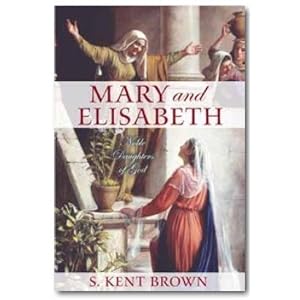
Mary and Elisabeth by S. Kent Brown

BYU professor, Kent Brown, examines the lives of two of the most important women in scripture (the two mothers of the Messiah and the greatest prophet ever). As we so often gloss over the lives of Mary and Elizabeth, and focus on the birth of Jesus (who is of course the reason for the story), this is an excellent study of the lives of these two women. There is much we can learn from their examples of faith and devotion.

A Coming Christ in Advent and
An Adult Christ at Christmas by Raymond E. Brown

Short, yet very detailed and doctrine heavy booklets on the story of Christmas by Raymond Brown, one of the greatest American Catholic scholars of our day. The first booklet covers Matthew 1 and Luke 1, the second booklet covers Matthew 2 and Luke 2. This is the very condensed version of his 750 page Birth of the Messiah.

January 14, 2019

Gold, Frankincense and Myrrh


According to the second chapter of Matthew, wise men brought the Christ child gifts of gold, frankincense, and myrrh. Because there were three gifts, we often assume there must have been three wise men, but the Bible does not actually tell us the number. These three gifts were extremely valuable in ancient times and were likely the main financial source for enabling Joseph and Mary to flee from Bethlehem to Egypt. In addition to their great value, each of these gifts are highly significant in their symbolism and relationship to various titles of Jesus Christ and to ancient temple worship.

Gold was often seen as a symbol of wealth, worldly power, and kingship. Gold was also extensively used throughout the ancient structures of worship to the Lord, becoming a symbol of divinity or the presence of God. [1] Within the Tabernacle of Moses, the walls were covered in gold, as well as each of the pieces of furniture within the Holy Place and Holy of Holies. The beautifully carved walls of Solomon’s temple were likewise overlaid with gold, as well as the floors and inside furniture. Herod’s temple, the temple at the time of Jesus, also used gold throughout including large golden plates that adorned the interior walls. Gold was also woven into the fabric of the clothing of the high priest, as well as on the crown, the settings for the twelve stones, and the bells on the hem of the blue robe. The fact that the wise men brought gold, a symbol of kingship, temple worship and divinity, can point to the titles of the Savior as the King of kings and the Great High Priest who intercedes on our behalf.

Frankincense and myrrh are both tree resins from two types of trees that grow mostly in the Arabian Peninsula. Both incenses were very valuable and were known for their healing powers and were often combined with oil and other spices to create healing balms. Both incenses are harvested by wounding the tree by cutting and removing a small portion of the bark. The tree resin then drips or bleeds out, after which it is allowed to harden before it is removed.

Frankincense is known for its sweet and pleasant smell when burned or used in perfumes. In ancient times few bathed on a regular basis or had multiple pairs of clothing to change and wash. This means that any pleasant smells, such as frankincense, that could mask the many unpleasant smells, had great value. In temple worship, frankincense was placed on the Table of Showbread and burned by the priests every Sabbath. In addition, it was combined with other incenses and burned every morning and evening on the altar of incense. According to Psalms, burning incense represented the prayers of Israel ascending to the Lord before the veil of the temple (see Psalm 141:2 and Revelation 5:8). It was here at this altar where Zacharias had the vision of the angel Gabriel, foretelling the birth of his son John the Baptist, who would prepare the way for the Messiah.

Myrrh was used as an incense, medicine, and perfume. In temple worship, myrrh was added to the anointing oil by heating it and then combining it with olive oil. This sacred anointing oil was used to anoint the priests at the Tabernacle and later Jerusalem temples. Myrrh was also often used in the burial process, wrapping it within the folds of the bound, deceased body, helping to mask the smell of the decaying flesh. According to the Gospel of John, Nicodemus brought 100 pounds of myrrh and other aloes to wrap the body of Jesus, a massive amount fit for the King of kings. On the cross, Jesus was also offered wine mixed with myrrh, probably to help decrease the excruciating pain. However Jesus refused the mixture, likely preferring to bear the full weight of suffering.

Just as the frankincense and myrrh trees are cut and bruised so that they can bleed out precious resin used for healing, incense and anointing, so too the suffering and blood of Jesus brings forth power of healing and redemption. It is through His suffering that comes healing to our souls, anointing power and answers to prayer through personal and temple worship. It is because of his blood, shed in Gethsemane that allows us to mask the sting of death through His triumphal resurrection. The title of Jesus Christ as the Tree of Life truly gives beautiful meaning to the words of Isaiah that “through his stripes we are healed.”

It is remarkable that each of these three gifts of the wise men—gold, frankincense, and myrrh—have so much symbolic significance, teaching us that all things point to and testify of the ultimate mission of Jesus Christ, His suffering, atonement, and resurrection from the dead.


[1] The Lost Language of Symbolism by Alonzo Gaskill, page 91-93

December 9, 2018

Swaddling Bands and a Manger


On the night of the Savior's birth, an angel of the Lord proclaimed to the shepherds that the Messiah had been born in Bethlehem. The angel then told the shepherds to go and find the babe, and that they would recognize him because he would be "wrapped in swaddling clothes, lying in a manger" (Luke 2:12). This phrase, at least in part, is repeated three times in the Nativity story (Luke 2:7, 12, 16), so what is the significance of swaddling bands and a manger and why would this be a sign unto the shepherds?

Swaddling an infant in ancient times was a common practice, showing a child was properly cared for. Ezekiel 16 symbolically describes the birth of Israel, and how because of her wickedness was not properly cared for, or swaddled. It reads: "And as for thy nativity, in the day thou wast born thy navel was not cut, neither wast thou washed in water to supple thee; thou wast not salted at all, nor swaddled at all" (Ezekiel 16:4).

From this verse we learn several things about birth in ancient times. First, the umbilical cord was cut, then the infant would be washed with water. This washing was to cleanse the child of the amniotic fluid and blood present during birth. The baby was then rubbed with a small amount of salt, combined likely with olive oil, [1] to help clean and disinfect the child. Salt was also added to every offering at the altar of sacrifice in the Tabernacle and at the temple, and it is likely that Israelite mothers saw the salting of their infant as a way to symbolically offer their child to the service of the Lord.

After being washed and salted, the infant was then wrapped with long strips of linen or cotton swaddling bands. These bands helped to provide comfort to the child, the tight bands replicating the feeling of the womb. "It [also] is possible that swaddling bands were, at least on some occasions, marked in some way … in order to identify whose baby it was." [2] Some writers, because of later Jewish traditions, have also suggested that these bands were embroidered with symbols of the infant's ancestry, such as a lion, or a branch or stem, for those of the lineage of David. [3]

The second part of the sign unto the shepherds is that the infant would be found lying in a manger. Since most cared for infants would be swaddled, this actual sign would help the shepherds recognize the baby, as he would be lying in a manger. Despite what we have seen in almost every Nativity scene, mangers in ancient Israel were actually built of stone instead of wood. Because of the abundance of stone in Israel, most construction used stonework, reserving the scarcer resource of wood for items such as roof timbers and doors. These mangers were of various sizes and generally were about six to eight inches deep. The scriptures tell us that once the shepherds found the infant lying in a manger, they knew, because of the uniqueness of the situation, that they had found the promised Messiah.

It is remarkable that water, salt, oil, and linen were all likely present at the birth of Christ. Each of these items point to ancient sacrifice and temple worship. Water was used both for the purification of the priests and for washing the sacrifices. Salt, as mentioned, was added to all sacrifices, symbolizing "the lasting nature of the covenant." [4] Olive oil was used in some sacrificial offerings such as for the grain offering, for the anointing of priests, and for lighting the menorah in the temple. White linen was used to clothe and dress the priests. In addition, the Savior laying in a feeding manger may have been a type and shadow for how we each must symbolically partake of His sacrificed flesh and blood. How appropriate that the true lamb of God, the infinite and eternal sacrifice, was salted, anointed, wrapped in cloth, and laid in a manger symbolically pointing to his sacrifice, of which if we partake, we will have eternal life!


[1] The International Standard Bible Encyclopedia pg. 670
[2] What on Earth are Swaddling Clothes? by John W. Welch
[3] Beloved Bridegroom by Donna B. Nielsen pgs. 35-36
[4] CES Law of Moses slideshow

November 27, 2016

Advent - A Time of Preparation


Today marks the first day of the Christian Advent season. Advent means "coming" and is a time of preparation for the coming of Christ. Three "comings" are celebrated at Advent; first the birth of Christ, second the coming of Christ into our lives through the communion or sacrament (the bread and wine representing his body and blood), and third the final coming of Christ at his second coming.

Advent season begins four Sundays before Christmas. During these four weeks, families attend special Masses or church services, light the four (or sometimes five) candles in their advent calendar, and study and prepare for the "comings" of Christ.

Advent is a wonderful time to reflect on our own acceptance of the Savior. It is a time when we can each ask if we have truly accepted and allowed the Savior to "come" into our life. One of my favorite things to do is to study one chapter each week from the four chapters of the Nativity (Matthew 1-2 and Luke 1-2). As I study these chapters, I ask how I would have accepted Jesus at his birth; would I be like the wise men bringing gifts, or like Mary who humbly accepted her difficult yet important role, or Zacharias who at first doubted the angel, or even like Herod who sought to destroy the Christ child.

Below are just a few of the many Advent traditions that can be incorporated during the four weeks prior to Christmas to help prepare for the "coming" of Christ:

Lighting Candles: One of the main traditions of Advent is the lighting of the Advent wreath. The wreath includes four (or sometimes five) candles at the center of a wreath. One candle is lit on the first Sunday, two the second, three the third, and all four on the last Sunday. If the wreath has five candles, the last candle is lit on Christmas Eve or day. The colors of the candles vary between cultures and sects, but most often will have three purple, one pink, and one white (the white being the fifth candle). Because you use the same candles each night, the candles create a nice stepped effect as you progress through the four weeks. These candles represent many things, but my favorite is the symbol of light, for truly light came forth because of the birth of Christ (the light increasing until the actual night of Christmas). The color purple also represents royalty, symbolizing the "coming" of Jesus in glory as King of kings, and Lord of lords.

Advent Calendar: Many families will celebrate Advent by purchasing an Advent calendar. The calendars have 24 pockets or doors that hide a different object or piece of candy that is revealed each night. Many calendars will include a person or animal that can be added to a Christmas nativity, with the Christ child being added to the nativity on Christmas Eve.

Christmas Nativity: Another tradition is to place the nativity set out little by little throughout the month, placing a new piece (such as a shepherd, wise man or lamb) out each week as the month progresses. Some families will even place the wise men in a different room and move them closer to the manger until they arrive on Christmas Eve. Others will let children place a single piece of straw on the empty manger for each good act they perform each day. In this way, they are helping to prepare a more comfortable bed for baby Jesus.

However you may chose to celebrate Advent, my hope is that this season may be a season of rejoicing. "For unto us a child is born, unto us a son is given: and the government shall be upon his shoulder: and his name shall be called Wonderful, Counsellor, The mighty God, The everlasting Father, The Prince of Peace" (Isaiah 9:6).

December 22, 2015

Ancient Birth Customs - Nativity Story


Interview with Rebecca Holt Stay, Instructor of Biblical Studies - BYU Continuing Education

There's not a lot of description in antiquity of the details of something as mundane as birth. And so when it gets mentioned, it's usually done in some kind of symbolic context or in telling a story. And probably the most powerful place where a story of birth is told is in Ezekiel 16, which describes the birth of the nation of Israel. It has been born out of the waters of the Red Sea as a young girl. This girl will grow up to be the bride of God that He will marry at Sinai. And at this point, the description is given of that birth of that little girl. "As for thy nativity, in the day that thou wast born thy navel was not cut, neither wast that washed in water to supple thee; thou wast not salted at all, nor swaddled at all. No eye pitied thee, to do any of these things unto thee, to have compassion upon thee" (Ezekiel 16:4-5). So by saying those things didn't happen, the text is saying that's the norm. This is what normally happens. You normally would have a midwife there who is going to show compassion on this child and help the mother.

Each of those steps is important. First, the umbilical cord would be cut, probably tied off. Then the child would be washed in order to get the blood off, and the next step is the salting of the child. Now there are a lot of symbols of what salt means in scripture. In terms of hygiene the reason for the salting is that the salt is an antibiotic, and it's going to kill germs that might be present on the skin of the child. Perhaps a disease it might have contacted from its mother at birth, or to kill anything that has gotten on its skin. So it has a very real healthy meaning, that's why it would be salted. Some of the symbols, some will say that because salt is given with the sacrifices at the temple, that this might be preparing a child as an offering. (see for example Leviticus 2:13). Salt is also a preservative, so it may be done to preserve the life of the child. Of course, that's also the hygienic purpose, is preserving the life of the child.

Then it mentions, you are "not swaddled at all." Now there's only two mentions of swaddling in the Old Testament and this is one of them. And a child being swaddled means wrapped in rags or clothes prepared for the purpose of providing a diaper and a covering for the child. Every child normally would be swaddled. The fact that she isn't swaddled is really unusual. Now because that's such a normal thing to do, it made me wonder, why would swaddling bands be a sign in the book of Luke? Because that's what it says, as the shepherds are being told to go and see the child, they are told: "You will find the babe wrapped in swaddling clothes, lying in a manger" (Luke 2:12). Every child is wrapped in swaddling clothes, lying in a manger is unusual. I really love the fact that the King James translators kept that french word, because 'mange' means to eat. And this is the bread of life who has been born (see John 6:51). Christ is the 'bread of life,' and we will ceremonially eat his body, and so that's suggested by that use of 'manger.'

So I decided I would look back into the Old Testament and see how swaddling bands could be a sign of anything? So the only other place that you find it, other than in this description in Ezekiel of swaddling every newborn child, is when you're in the book of Job. And God is responding to Job's questions about why do bad things happen to good people. And he essentially says, "What do you know Job? Where you there when I created the world? Where you there at the foundation of the world when I built the world?" And then he uses this beautiful metaphor for the creation of the world. He describes it as "who do you think shut up the sea with doors, when it then broke forth, as if it [the earth, newborn earth] had issued out of the womb? When I made the clouds the garments thereof, and thick dark clouds a swaddling band for [the earth]" (Job 38:9).

So here you have a newborn planet that has just been created. And it is wrapped in these clouds that are the swaddling bands. I love that, because the cloud is a symbol of someone in the Old Testament. That does relate to one person, and the cloud is the symbol of the presence of Jehovah. There is a pillar of cloud by day over His tabernacle. His chariot is a cloud. And so when he is born into mortality, He is wrapped in His symbol. In clouds, "trailing clouds of glory" does He come, from His Father who is His home, from the Wordsworth poem. [1]


[1] Intimations of Immortality from Recollections of Early Childhood by William Wordsworth

December 15, 2015

Who were the Wise men? - Nativity Story


Interview with Rebecca Holt Stay, Instructor of Biblical Studies - BYU Continuing Education

"When Jesus was born in Bethlehem, there came wise men from the east to Jerusalem saying 'where is he that is born King of the Jews, for we have seen his star in the east and are come to worship him'" (Matthew 2:1-2). No mention of them being kings. No mention of how many. No mention of how they traveled. But there's a lot of clues there about them. The fact that they were in the east when they saw the star, that's how I choose to read it, rather than that wherever they are, they saw the star in the east. But rather that they were in the east when they saw the star, and east of Jerusalem is where the vast majority of Jews were actually living at the time of Christ.

The Jews were taken into captivity in Babylon 600 years before the birth of Christ, and they never came home. Only a small contingent returned to Jerusalem. So the center of learning for the Jews was Babylon. And that's where the wise men would be. Wise men like Daniel, Shadrach, Meshach, and Abednego. And so they will continue to be advisers to the court and will be literate, scientific men who in Babylon would be studying astronomy for the signs of the sky, and to determine when to have the holy days that are spoken of in scripture. So if you're coming to worship the King of the Jews, odds are you're Jewish. And you're reading about Him in a Jewish book, which would be the Old Testament.

And Isaiah in particular, has a lot to say about those who come to worship the King of the Jews. And I think that Christians asked a lot of questions as this story in Matthew was told and written down. They wanted more information. Where did they come from? What were their names? How did they get there? And so they turned back to their scriptures to find those answers. And so it's in chapter 60 of Isaiah, we get a lot of indication of where those answers came from.

It begins: "Arise, shine; for thy light is come, and the glory of the Lord is risen upon thee" (Isaiah 60:1). So the light has arisen, the star is there. And in verse 3: "And the Gentiles shall come to thy light, and kings to the brightness of thy rising." So immediately we say "Aah! There gentile Kings!" And then it says: "a multitude of camels will cover thee, the dromedaries" (Isaiah 60:6) and so we have camels as the way they're coming, and in particular, dromedary camels. Coming from Midian, and Ephah, and Sheba. Well there you have the three countries, so there are three of them. And in particular, Ephah and Midian are middle eastern countries. Sheba is Ethiopia, and so one of these kings must be black. They'll end up with names from the early Christians being named Balthazar, Caspar, and Melchior. Those are just honestly made up names, but they're great names! And then it describes what these gentile kings will bring: "they will bring gold and incense; and shew forth the praises of the Lord" (Isaiah 60:6). So in my mind I think, OK, we have Jewish men who are educated, and literate, and they read in the scriptures that there will be a star (that's from the book of Numbers) that will arise at his birth, in the prophecies of Balaam. So looking for that star, they search the heavens, and finding a star that they believe to be that star, they say "When that star arises, we got to get camels, and go. And what we need to bring is gold and incense." And so they will bring gold, which is a kingly gift. They'll bring incense, probably two different kinds, frankincense and myrrh. Frankincense was offered at the temple with every offering, both on the altar of prayer and the altar of sacrifice. Myrrh was melted down and mixed in a special recipe into the anointing oil of the temple, and was also used for anointing the bodies of the dead. So there's some great symbolism there.

And then goes on and talks about some other great pieces. "Doves in the window," and so we'll see doves in every manger scene (Isaiah 60:8). It has the "glory of Lebanon shall come to thee, the fir tree, the pine tree, and the box to beautify the place of my sanctuary" (Isaiah 60:13). And so most of our sanctuaries, our churches, are decorated with the evergreen trees and branches, because Isaiah said so.

And I love the idea that these men read the scriptures and said "somebody's got to do it, why not us! We will be the ones who will fulfill the prophecies of the Lord and we will get to meet the Messiah!" And so it's really cool to think of those years (that at least two years that they traveled), and talked about what this is going to be like. And then to fall on their knees as they meet the Christ child and His parents. What an amazing moment that must have been to pay them back for their efforts.

December 1, 2015

The Temple Shepherds - Nativity Story


Interview with Rebecca Holt Stay, Instructor of Biblical Studies - BYU Continuing Education

"There were in the same country as Joseph and Mary, shepherds abiding in the field keeping watch over their flocks by night" (see Luke 2:8). We understand those to be the temple flocks, which were kept in the Bethlehem area just south of Jerusalem. And when you think of a field, it's not a field, its a hill. It's a very hilly rocky place. When my husband and I were there in the shepherd's fields of Bethlehem, a flock of sheep and goats went by. So it was a lovely experience.

But shepherd has a really deep meaning in the Old Testament. Shepherd in Hebrew is 'reu.' Now the feminine form of that is Ruth, but we'll see it in the man's name Reuel, which means shepherd of God, which is Jethro. And Moses is sent to Jethro to be taught how to shepherd God's people. But maybe more importantly, 'reu' has a second meaning and that is 'friend' because shepherds eat with the flock and therefore they are their friends. That's the connotation. So the shepherds are the friends of the sheep.

And these shepherds, and every shepherd would be out in the fields at lambing season because when the mother sheep drop the lambs there can generally be two born at the same birth. They need to there to witness which of the two lambs is the first born, because only one of those lambs will be acceptable at the temple as an offering for sin, as a first born, male, perfect lamb. And so they would have some red thread or string with them to tie loosely around the neck of the first born lamb in order to mark it as a first born. And thus it would be essential at the birth of the Lamb of God that shepherds are there to witness His birth as Mary's first born. And then just as the shepherds in the temple flock would indicate which are the first born and tell their leaders, and tell the priests at the temple which are the first born lambs, they would go out and say, "ah, the first born Lamb has been born." And bare testimony to the coming of that first born Lamb.

December 19, 2014

The True Nativity Story: Swaddling Clothes


When we think of swaddling clothes, as mentioned in the story of Luke 2, we generally think of white blankets wrapped around the infant baby Jesus. We see these simple bands of cloth as a sign of humility and poverty. However, it is probable that our image of these strips of cloth is actually very wrong.

First, it will be helpful to understand what we do know from the scriptures about swaddling. In Ezekiel 16:4 we learn of the practice of swaddling when the Lord compares Israel to an illegitimate child who has not been properly cared for or swaddled because they had rejected the Lord. It reads, “And as for thy nativity, in the day thou wast born thy navel was not cut, neither wast thou washed in water to supple thee; thou wast not salted at all, nor swaddled at all.” From this we learn that washing, salting and swaddling was actually a sign of being properly cared for.

We can safely assume that Jesus at his birth would also have been washed and salted. In ancient Jewish culture, salt was a sign of a covenant and was used during sacrifices at the temple. Being salted at birth was a sign or symbol that Jesus was not only part of the covenant, but was literally the reason for the covenant.

From other ancient traditions about swaddling we also learn that swaddling was done with specific bands that were embroidered by the bride during the year between betrothal and the marriage feast. The cloth would have been around five to six yards long and four to five inches wide and would be embroidered with signs of the family tribe. Because Joseph was of the tribe of David through Judah, the swaddling bands of Jesus may have included depictions of the lion of Judah or of the stem of Jesse.

Swaddling bands with a lion of Judah
According to some scholars these bands were then used during the marriage feast, being wrapped around the hands of the bride and groom symbolizing the tying together, or unification of the two through the swaddling bands. These same bands would then be used to wrap their child at birth, perhaps symbolizing that the child is wrapped and in essence protected by the very same covenants that wrapped the newlywed couple on their wedding night.

Swaddling bands wrapped around the hands for the marriage ceremony
The fact that Jesus was wrapped, more than anything, was a sign that he was not an illegitimate child of God, but instead had not only been claimed by God the Father, but by Joseph, who in essence was adopting Jesus into his royal lineage of David.

How profound is the fact that Jesus, the very creator and giver of the Gospel covenant, was washed, salted, and wrapped to symbolize the very covenant He, as Jehovah, had given to the ancient prophets of old.

Other resources:
Swaddling Bands from Savior of the World Production notes
Why did Mary swaddle her baby by Hearken Institute
Little Lamb painting by Jenedy Page

December 13, 2014

The Birth of John the Baptist


The story of the birth of John the Baptist begins with the visit of Marry to Elizabeth while they are both pregnant (see Luke 1:39-80). Elizabeth immediately recognizes that Mary will be the mother of the Savior, of the Messiah.

Mary then praises the Lord for this wonderful blessing that she will have. This prayer is known today by the title of the Magnificat (the first word in the Latin). It is interesting that the blessing or praise that Mary recites is very similar to the praise that Hannah recites after her son Samuel is born. If you will remember, Hannah was barren and unable to have children. When she came to the Tabernacle to pray unto the Lord, she was promised that she would be able to have a child. Once her son Samuel was born, she came again to the Tabernacle and praised God. The prayer that she offers is very similar to that of Mary's. Notice that she begins with almost the exact same phrasing as does Mary. “And Hannah prayed and said, My heart rejoiceth in the Lord, mine horn is exalted in the Lord: my mouth is enlarged over mine enemies; because I rejoice in thy salvation” (1 Samuel 2:1) Mary proclaims, “My soul doth magnify the Lord, and my spirit hath rejoiced in God my Saviour” (Luke 1:46-47)

Mary stays with Elizabeth for about three months. However, for some reason she leaves before the birth of John the Baptist (see Luke 2:55-56). John is then born, circumcised, and on the eighth day is named. The family all gathers around and rejoices, which interestingly enough is unlike the story of Mary who will have no family or friends around her. In fact, the only people that will gather around her are complete strangers. As the family declares that the name should be Zacharias, the name of his father, Zacharias immediately asks for writing tablet. This tablet most likely was a wax tablet that you would impress or engrave with a stylist. The first thing that comes out of his mouth is a pronouncing of a blessing; a blessing not only on his own child but a blessing on all of Israel.

Recreated wax tablet, similar to what Zacharias may have used
It is interesting that Zacharias now has the chance to pronounce the blessing that he never was able to pronounce on the day he saw the angel Gabriel. A blessing that truly will bless all people because through his son, John the Baptist, the era of the Messiah will be ushered in. And as Jesus proclaimed, John truly was the greatest prophet ever to live.

December 11, 2014

The Story of Joseph


Joseph is one of my favorite characters of the nativity story. I think it's because he not only shows an incredible amount of obedience to the Lord, but more importantly, he shows a great level of kindness and forgiveness to those around him.

Joseph was a carpenter or craftsman most likely of stone, not of wood as is often depicted in art work. According to Matthew, Joseph actually lived in Bethlehem, not in Nazareth as the Lukan account records. According to Jewish custom we also know that Joseph was most likely quite young. In fact, he was probably only about seventeen to twenty years old when he was engaged to Mary. We also know that Joseph knew the law and the scriptures, and more importantly, he not only knew how to obey them, but he knew how to use the law to bless the lives of those around him.

To better understand the story of Joseph it will help to have a historical setting for the marriage process during the time of Christ. There were three parts of the Jewish marriage: first, there was the betrothal, then there was a waiting period, and then there was the actual wedding feast.


During the betrothal, the groom and the bride would actually exchanged wedding vows, very similar to what we would have in a modern day wedding. During this time, they were literally considered man and wife. During the next phase, the waiting period, the groom would prepare a home, and the family would prepare for the enormous wedding feast that would occur. The third phase was the actual wedding feast. On this night, the groom would go to the bride's home, followed by a huge procession of lights and torches and lamps. There he would take his bride back to his home, or to his parent’s home, and the feast would begin! The feast would be huge and could last up to seven days long, which would help you understand why they needed a year to prepare. At the end of the night, the bride and the groom would consummate their marriage. However, up to this point they were still were considered husband and wife. So if the wife at any point during the betrothal process was found to be pregnant, according to the law, the husband had to divorce her.

Now naturally there are two ways for a woman to become pregnant. First, she would break her vows that she had made by committing adultery, and second she would be raped, which would mean she would still be innocent.

If the husband found out that his bride was pregnant he had two options. He first could bring her to court, where there would be witnesses and a judge who would try to determine whether she was guilty or not of committing adultery, and second the groom could divorce his bride privately. Now this does not mean that it would be private in the fact that nobody would know about it, everybody would still know about it! Nazareth was a very small town and everybody would know about what was going on. By divorcing Mary privately, Joseph not only saved Mary from humiliation (by not having to be brought before a public court), but more importantly he saved her life because of the fact that accusations were never brought against her, meaning that nobody could accuse her of being guilty of committing adultery (the penalty being death).

As we study the life of Joseph, we learn several valuable things about who he was and about his character. First, we learn that even though it was an arranged marriage, Joseph really loved Mary. The fact the he decided to divorce her privately shows that he cared more about Mary then about being vindicated for something that had been done wrong to him.

Second, everybody knew the story Joseph and Mary. Everybody knew what had happened, or at least what the townspeople would accuse them of. By taking Mary as his wife, Joseph shows that he was willing to do whatever it took and to deal with whatever would come in the future because he knew what the Lord had commanded and he loved Mary.

Third, it shows how much he cared for Jesus Christ. The fact that he actually names Jesus as the Matthew account records (see Matthew 2:25), shows that he not only was willing to take Mary in, but he was actually taking Jesus in as his own adopted son (in essence he was taking in an illegitimate child). By naming Jesus, Joseph literally is legally adopting him into his own line, which is the reason that Jesus Christ can be called the son of David, just as Joseph was the son of David.

Last, we learn that Joseph immediately acted. In the scriptures, it reads “Then Joseph being raised from sleep did as the angel of the Lord had bidden him, and took unto him his wife” (Matthew 1:24). In other words, Joseph was quick to act and did exactly as the angel told him the very next day. From this, it would seem that there was no wedding feast that actually occurred, dashing all the hopes and dreams that Mary and Joseph may have had. The huge feast, the lights, the torches, the music all would have been cancelled and forgone because of the fact that Jesus would be born to Mary. And yet this does not discourage Joseph to the least degree. He knows what is right and he acts.

It is often said that Mary was chosen by the Lord because of her faithfulness and her devotion to the Lord, which is absolutely true, and I would say it is just as true that the Lord chose Joseph to be the adopted father of the Savior because he knew and understood the character of Joseph.

December 7, 2014

The Annunciations


Luke begins his Nativity narrative with the annunciation of the angel Gabriel to Mary and Zacharias. It seems to be very clear that Luke was purposefully trying to place these two stories next to each other so you could see a difference between not only these two individuals, Mary and Zacharias, but also between these stories, both the birth of John the Baptist, and the birth of Jesus Christ. Though John's birth is miraculous, he is born of natural means, while Jesus’ birth is unnatural and impossible (though with God, nothing is impossible).

The story begins by telling of the angel who comes to both Mary and Zacharias and telling of the foretold child (see Luke 1:11 and 1:28). Both accounts mention the circumcising and naming of the child (see Luke 1:59 and 2:21). Both accounts tell of family, friends, and others who are amazed at the events of the birth of these two individuals (see Luke 1:58 and 2:18). It also speaks that both children "grew and waxed strong in the spirit" (see Luke 1:80 and 2:40). However, there is one difference here, it mentions that Jesus was "filled with wisdom and the grace of God was upon him." Now this is not to mean that John the Baptist did not have the grace of God or wisdom, but it again shows that Luke is trying to contrast a prophet, who is great, with the Messiah, the Son of God.

Interestingly enough, the story that Luke begins with, begins in the temple. Of the six stories in Luke 1 and 2, half of them happen in the temple, showing the emphasis that Luke puts upon the temple within his writings (both the gospel of Luke and Acts).


The first annunciation by Gabriel comes to Zacharias. Zacharias was a descendant of Aaron, and of the course of Abia. During the reign of King David there were so many priests, so many descendants of Aaron that King David decided to divide them up into twenty-four courses, so Abia was one of these twenty-four courses. Each of these courses throughout the year would serve one week twice throughout the year, meaning that Zacharias would only have the chance to be in the temple and actually serve for two weeks during the entire year.


Again, because there were so many priests, each of the specific assignments were drawn by lot. The greatest assignment was to burn the incense before the veil of the temple. This incense was significant because it represented the prayers of the righteous ascending to heaven before the veil of the temple, and it was the closest place that Zacharias would ever come to the Holy of Holies. It is significant that one of the spices that was used within the incense is actually frankincense, thus tying the gift given to Christ from the wise men to the temple ritual.

Priests burning incense on the altar (image from Temple Institute)
Once the priest had entered in the temple on that morning and had burned the incense, he then would exit the temple and pronounce a blessing on the people. Of course, Zacharias would never be able to pronounce this blessing because he had been made unable to speak by the angel Gabriel.

Again, it seems that one of the things that Luke is trying to do is put these two stories right next to each other, purposefully trying to show us and teach us how we should act when we receive inspiration or a revelation from God. The angel Gabriel appears to both Mary and Zacharias (see Luke 1:11 and 1:28). Both are told to fear not, and that they would be blessed with a child (see Luke 1:13 and 1:30-31). Both Zacharias and Mary ask for a sign or for understanding (see Luke 1:18 and 1:34). The angel then gives both of them a sign; in the case of Zacharias he is made dumb and possibly even deaf (see Luke 1:20), and Mary is given the sign that she will see Elizabeth with child even though Elizabeth had been claimed to be barren (see Luke 1:36).

So what is the difference? How is it that one is cursed and one is blessed? One of the differences seems to be in one simple word. In Zacharias’s account, it reads, “and Zacharias said unto the angel, Whereby shall I know this? for I am an old man, and my wife well stricken in years” (Luke 1:18). Yet, Mary says, “then said Mary unto the angel, How shall this be, seeing I know not a man?” (Luke 1:34). Zacharias is seeking for a sign to know if the angel is really speaking of the truth, while Mary believes, yet is only asking how it will actually happen.

One of the other things that differentiate this story is how Mary also responds: “and Mary said, Behold the handmaid of the Lord; be it unto me according to thy word” (Luke 1:38). Mary not only believed, and was only asking for clarification of how it would happen, but she immediately said “I will do as you would have me do.” You have to realize the consequences of this decision. She would be mocked and scorned for years possibly her whole life; people thinking that she had committed adultery when she really was innocent. And yet she humbly and quickly accepted the will of God. This is a powerful testimony up who Mary was. It is no wonder of why God choose Mary to be the mother of His own Son!

December 3, 2014

Live Nativity at Bluffdale, Utah


On Monday night I had the chance to go see a Live Nativity in Bluffdale, Utah. I heard about it last year, and thought it would just be one of those simple sets with maybe 10 people dressed up in costume. So of course, I did not bring my camera. Let's just say I regretted that decision when I actually saw the amazing work everyone did. Camels, donkeys, sheep, llamas (which are not exactly biblical, but still really cool!), chickens roaming the streets, a ram, and that was just the animals. Then you had street vendors, a poor beggar asking for money, a carpenter's shop, a loomer, potter, and of course Mary, Joseph and the baby Jesus. And then the sets! They were amazing! It felt like you had stepped back in time and were wandering the streets of Bethlehem. When I found out they were doing it again this year, I decided I had to bring my camera. Here is the finished work. Enjoy and Merry Christmas to everyone! And if you are in Utah, go see it!

January 8, 2014

How to burn frankincense and myrrh


Frankincense and myrrh were two of the gifts that the wise men brought to the young Jesus. To culminate the Christmas season, I enjoy burning these two spices on the 12th day of Christmas, January 6th, the day many Christians commemorate when the wise men came to Mary, Joseph and the young Jesus.

To burn your own frankincense and myrrh:
  1. Fill a heatproof container with about 1-2 inches of sand. The sand will help dissipate the heat so that the incense burner will not get as hot.
  2. Turn your stove on and place the charcoal briquette on the burner. I like to use the stove to light it, as it is much easier than using a lighter, though both will work.
  3. Turn the charcoal over until the entire briquette is lit.
  4. Remove the briquette and place in your incense burner with the charcoal ‘dish’ side up.
  5. Fill the briquette with salt. The salt helps the incense to burn at a lower temperature, which makes it burn longer, and with less smoke.
  6. Place just a few pieces of resin on the center of the briquette.
  7. As the resin stops smoking, place more pieces of resin on the burner as desired. The briquette should burn for about 30-45 minutes.
The gifts of frankincense and myrrh
Now, you can sit back and while reading the story of the wise men, you can enjoy the smell of the gifts brought to the Christ child over two thousand years ago.

January 6, 2014

Frankincense and Myrrh


In the gospel of Matthew we read of the wise men who came bearing gifts for the young Jesus (see Matthew 2:11).  This most likely occurred shortly before Mary and Joseph fled to Egypt to escape from Herod's murderous plot to kill the children of Bethlehem, thus these great gifts may have helped to finance their trip through the wilderness to safety.  Traditionally there were three wise men because there were three gifts, gold frankincense and myrrh.  All three of these items were very highly valued in ancient culture.  Only the wealthiest could afford them, yet they are also very symbolic gifts given to the Savior at His birth.

Though gold was significant in many ways, I only wish to discuss the two gifts of frankincense and myrrh. Frankincense and myrrh are both made from tree sap and are used for various types of incenses and ointments.  The sap is collected by cutting or whipping the tree to cause it to "bleed."  The sap is then allowed to dry and then pulled off the tree.  The above picture shows the dried sap after being harvested.

Both frankincense and myrrh were known for their healing powers and were combined with oil and other spices to create healing balms.

The gift of myrrh
Myrrh was used to mask the smell during the embalming process of the dead, by wrapping this and other spices within the folds of the cloth that wrapped the dead.  Myrrh was used in the burial process for the Savior (see John 19:39).

The gift of frankincense
Frankincense was used in the tabernacle of Moses and the later temples in Jerusalem, as one of the of the spice that was burned at the altar of incense (see Exodus 30:34-36).  This incense that was burned in front of the veil that separated the priest from the Holy of Hollies (or the presence of God) symbolized the prayer of the righteous (see Psalms 141:2).  This incense was a to be a sweet savor to the Lord, just as our prayers.

How fitting that the gifts given by the wise men were in similitude to the gift the Savior gave in Gethsemane and on the cross.  It is through the purchase of His sacrifice that we are enabled to flee from Satan to the safety of His atonement.  It is through His stripes that we are healed (Isaiah 53:5).  It is through His blood that brings a sweet savor to life and death.  It is because of his blood, shed in Gethsemane and from the blows from the whip, that allows us to mask the sting of death through His triumphal resurrection.  Just as these spices were used to heal the physical wounds of mortal life, so the atonement of Christ heals our spiritual wounds.  The atonement helps bring relief to our pain, and helps bring a sweetness to life's difficulties.  Because of His prayer in Gethsemane and on the cross, our prayers can and will be heard by the Father; our prayers become like a sweet savor to the Father because of the sacrifice of the Son.

Let us this Christmas season give a gift like the wise men.  A gift that is in similitude of His sacrifice.  A gift of our heart to the Lord and a gift of our service and love towards mankind.  A gift, though meager in comparison to His gift, that will likewise change the hearts and souls of those around us.